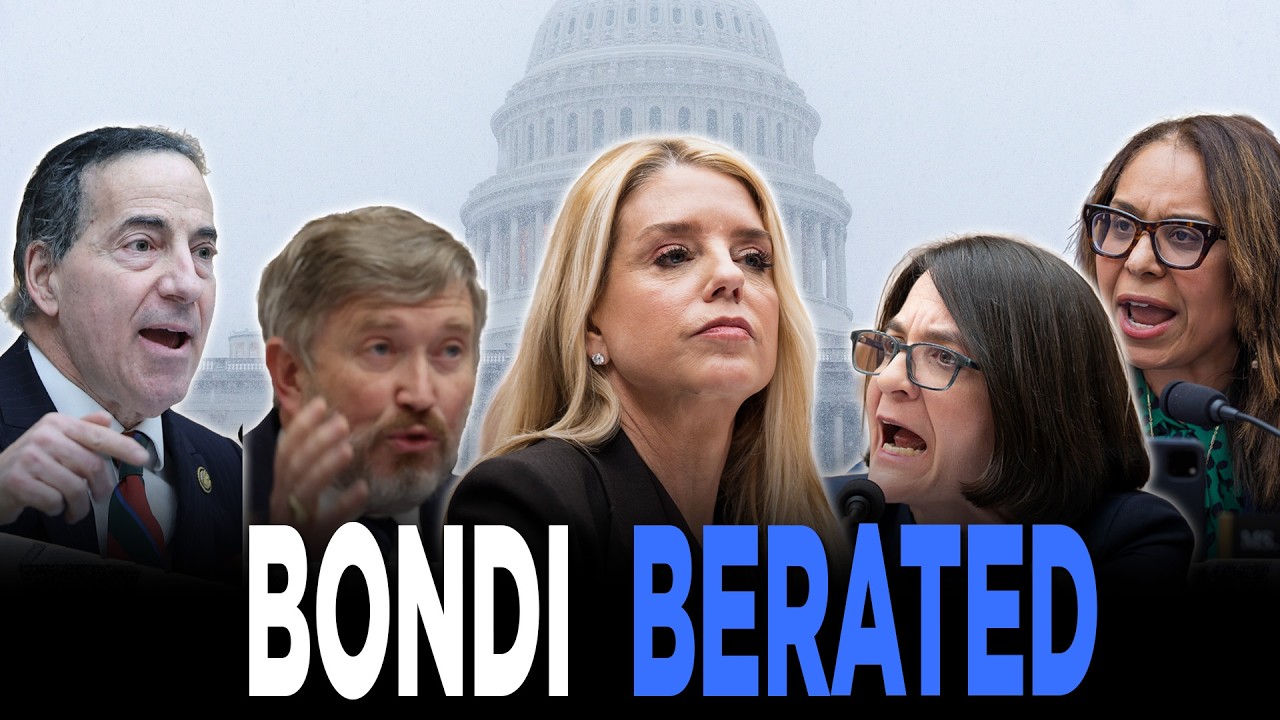
A Fiery Confrontation: The Pam Bondi Hearing Today Unpacks Epstein Files & Trump Agenda
The House Judiciary Committee recently became the epicenter of a political firestorm, as Attorney General Pam Bondi faced intense scrutiny during a contentious hearing. The session, widely dubbed the "Pam Bondi Hearing Today," quickly devolved into shouting matches, pitting Democrats against Bondi over the Justice Department's handling of Jeffrey Epstein records and perceived efforts to advance President Donald Trump's political agenda. For nearly five hours, the committee room was a theater of high-stakes political drama, with significant implications for both accountability in high-profile cases and the impartiality of the Justice Department.
This highly anticipated hearing saw lawmakers relentlessly question Bondi on several critical issues. At the forefront were the enduring controversies surrounding the Epstein case, specifically the heavy redaction of released files and, paradoxically, the accidental public disclosure of survivors' names. Compounding the tension was the evident pressure on Bondi and her agency from the White House to deliver tangible "victories" for President Trump's objectives, a dynamic that infused the proceedings with an overt political charge. The clashes underscored deep ideological divides and raised serious questions about transparency, victim advocacy, and the independence of legal institutions.
Epstein Files: A Deep Dive into Redactions and Accountability
Central to the "Pam Bondi Hearing Today" was the emotionally charged discussion surrounding the Justice Department's management of Jeffrey Epstein's extensive files. The very presence of Epstein survivors and their family members in the committee room served as a potent, heartbreaking reminder of the human cost of the department's perceived failures. Prior to the hearing, a press conference saw survivors like Dani Bensky issue a stark demand: "The DOJ needs to do its job. Give us the rest of the files and start the investigations."
The core of the legal and ethical debate centered on two conflicting issues: the Justice Department's heavy redactions of information in some parts of the Epstein files, contrasted with the egregious error of failing to properly redact the names of several survivors in others. Sky Roberts, the brother of accuser Virginia Giuffre, directly challenged Bondi, condemning her handling of the issue as "nothing short of a failure."
Rep. Pramila Jayapal (D-Wash.) brought the gravity of the situation to a head, asking the women survivors to stand and then directly challenging Bondi to apologize for the department's failures. Bondi, however, unequivocally declined, a refusal that further inflamed tensions and drew sharp criticism for a perceived lack of empathy. This specific exchange resonated deeply, leaving many survivors feeling "degraded" and unheard.
Even some Republicans expressed dismay. Rep. Thomas Massie (R-Ky.), who co-authored the bill compelling the Justice Department to release the records, accused the department of over-redacting certain information while simultaneously failing to protect survivor identities. Bondi, in a move that exemplified the hearing's combative tone, dismissed Massie's concerns by accusing him of "Trump derangement syndrome" and calling him a "failed politician." This moment highlighted not only the bipartisan frustration with the DOJ's handling but also Bondi's willingness to engage in personal attacks against her critics, regardless of party affiliation.
The implications of such redaction failures extend far beyond procedural missteps. They impact the trust survivors place in the justice system, potentially retraumatizing individuals who have already endured immense suffering. For a deeper understanding of the outcry, read more on how Bondi Under Fire: Epstein Survivors & Lawmakers Blast DOJ Handling and the subsequent Epstein Survivors 'Degraded' As Bondi Hearing Devolves Into Chaos.
Practical Insight: The controversy around redactions underscores the critical balance agencies must strike between transparency and protecting sensitive personal information, especially concerning vulnerable individuals. When this balance is not maintained, public trust erodes, and the victims of crime can suffer further harm.
Political Battleground: Trump's Agenda and Bondi's Defense
Beyond the Epstein files, the "Pam Bondi Hearing Today" served as a stark demonstration of the immense political pressure on the Justice Department under the current administration. It became clear that Bondi and her agency face significant expectations from the White House to deliver on President Trump's agenda, leading to palpable frustration from the President himself regarding what he perceives as slow progress and judicial setbacks. Bondi's performance throughout the hearing appeared, at times, to be crafted specifically for an audience of one.
Throughout the roughly 4½-hour session, Bondi sang President Trump's praises, at one point calling him "the greatest president in American history." She also appeared to be reading from prepared talking points on occasion, reinforcing the perception that her testimony was highly orchestrated. This overt alignment with the White House agenda sparked accusations from Democrats that the Justice Department was being weaponized for political purposes, rather than operating with impartial justice as its sole guiding principle.
Bondi did not shy away from personal attacks against her Democratic interrogators, often accusing them of "theatrics" while simultaneously engaging in highly theatrical counter-attacks. She stated she would not "get in the gutter with these people" even as she lobbed insults. Rep. Jamie Raskin (D-Md.), the committee's top Democrat, was labeled a "washed-up lawyer," while Rep. Hank Johnson (D-Ga.), a two-decade veteran of Congress, was accused of lacking experience. Even Rep. Mary Gay Scanlon (D-Pa.) received a dismissive comment regarding her contributions to public safety, prompting her sarcastic reply, "Thank you for the insult."
Bondi also turned the tables on Democrats, questioning their own accountability. "Did you apologize to President Trump, all of you who participated in those impeachment hearings against Donald Trump?" she asked, suggesting they "should be apologizing to Trump for their involvement in past impeachment efforts." This deflection underscored the highly partisan nature of the hearing, transforming it into a proxy battle over the past impeachment and the ongoing political landscape.
Analysis: Bondi's combative stance and overt praise for Trump can be interpreted as a strategic move to secure the President's favor and demonstrate loyalty. Such tactics, however, often come at the expense of fostering bipartisan cooperation and can further erode public trust in institutions meant to be independent of political influence.
The Human Cost: Survivors' Voices and Unanswered Apologies
Amidst the political sparring and legal arguments, the most poignant aspect of the "Pam Bondi Hearing Today" was the raw, unaddressed pain of the Epstein survivors. Six survivors of Epstein’s abuse and two family members of another accuser were present, their stories and suffering serving as a moral compass for the proceedings. Their hope was simple: an acknowledgement, an apology, and a commitment to justice. They left deeply disappointed, feeling "degraded" by the experience.
The refusal of Attorney General Pam Bondi to directly face them and offer an apology for the Justice Department's mishandling of their sensitive information was a profound blow. Dani Bensky, a survivor who has been vocal in her demands for accountability, articulated the collective feeling of betrayal. On NBC, she shared, "There was such a lack of empathy today. There was such a lack of, honestly, humanity today."
The survivors' presence was a powerful, silent protest against the system that had failed them, both by allowing Epstein to operate for so long and by subsequently mishandling the investigation's aftermath. Their calls for justice were not merely legal; they were deeply personal, seeking validation and closure. Bondi's decision to instead engage in political counter-attacks and dismissive comments left many wondering if the department truly understood the gravity of its responsibilities to victims.
Tip for Advocacy: For those seeking justice or advocating for victims, maintaining a strong, unified voice can be crucial. While public hearings can be frustrating, the consistent presence and clear demands of survivor groups can keep issues in the public consciousness and pressure officials for accountability.
Conclusion
The "Pam Bondi Hearing Today" was far more than a routine congressional oversight session; it was a microcosm of America's polarized political landscape, reflecting deep divisions over legal transparency, executive influence, and victim advocacy. The clashes over the Epstein files and the overt political undercurrent regarding President Trump's agenda created a volatile environment, where personal attacks often overshadowed substantive debate. While the immediate outcome saw little resolution, the hearing underscored the urgent need for accountability within the Justice Department and the enduring call for empathy and justice from survivors. As the political discourse continues, the lessons from this contentious day will likely echo in future debates over institutional integrity and the pursuit of justice for all.